Dear parents,

Maybe this sounds familiar.
It's 9:30 at night. Your kid just got home from practice, ate dinner standing up, and has a test tomorrow. You ask, "Did you study?" They say, "Yeah." Then their phone lights up for the fifth time in ten minutes.
That's our house too. I'm a parent of two teenage girls. One just started high school, and the other is in middle school. Both are club athletes who train every single day.

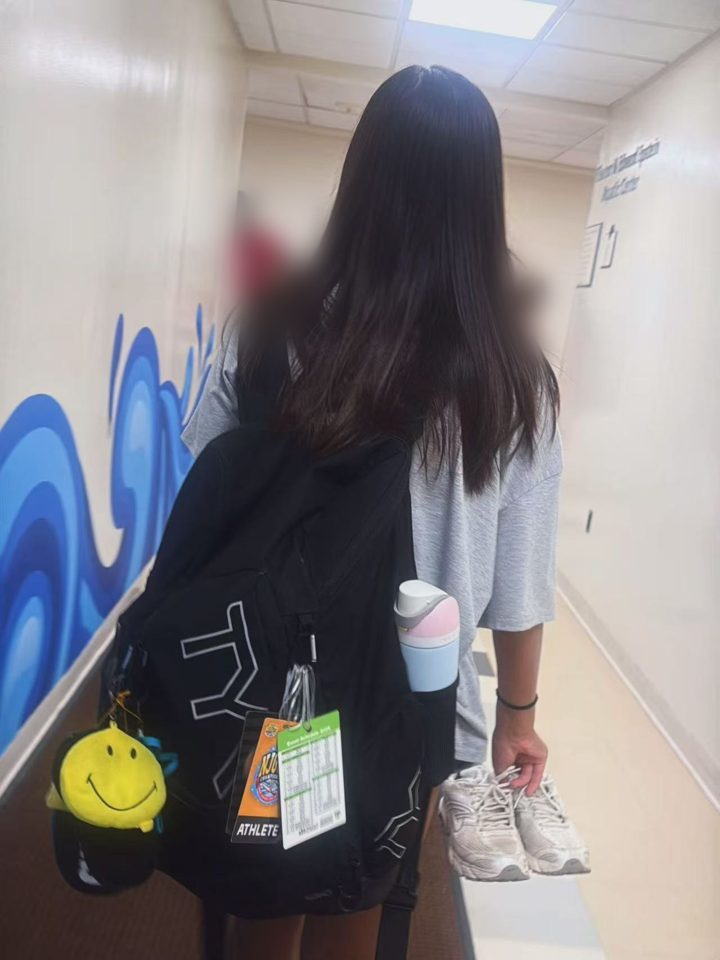
My oldest was a straight-A student in middle school. Then high school started, and her first month was hard. There was far more work, and the teaching was different. Class time turned into copying down notes, and the real learning was left for home.
But between school and swim practice, she doesn't have endless hours at home. She also needs a normal night's sleep. Studying longer wasn't an option. She had to study better.
Our girls are hard-working, smart and completely capable. Yours probably are too. The problem was never them. Every time they pick up their phones, they're up against trillion-dollar companies whose whole business is grabbing their attention. That isn't a fair fight.
So we did our own homework. The research kept pointing to the same five habits:
- Active recall. Quiz yourself instead of re-reading notes.In Lockin: every lesson has flashcards and practice questions.
- Spaced repetition. Spread studying over days, not the night before.In Lockin: each card comes back on the day it's due.
- The Feynman technique. Explain an idea in plain, simple words.In Lockin: one idea per lesson, in plain language.
- The Pomodoro technique. Focus for 25 minutes, then take a 5-minute break.In Lockin: Lockin Mode runs 25 + 5, or 15 + 5.
- Interleaving. Mix topics in one session.In Lockin: review several lessons together.
None of these ideas are new. If you've ever said "quiz yourself, don't just re-read it" or "don't leave it for the night before," you already knew some of them. We just couldn't find one app that put all five together for a busy teenager. So we built one for our girls.
We set a few rules for ourselves:
It had to live on their phone. Studying happens at the pool, in the car and between classes, not only at a desk.
Lessons had to be short and to the point. Teenagers' attention is pulled in a hundred directions. One idea per lesson, no 40-page guides.
It had to build focus, a little at a time. Pomodoro sessions stretch their attention span without asking for hours at once.
It had to motivate them from the inside. Nobody wants to be the phone police. So before each session, they write a message to themselves. If they try to quit early, they have to type that message back. It's a small pause, but it makes the next notification a little harder to give in to.
It had to use their friends. Kids show up for each other. Classmates share their notes into one study guide, and a nudge that someone in the group just started studying is often all it takes to get started too.
And there were two things we refused to build. We didn't want another app that just finishes the homework and never teaches the material. And we didn't want an app where kids spend more time watching ads than studying. Lockin never answers homework, and it has no ads. Ever.
If any of this sounds like your house, you're not alone. That's why we're sharing it. Lockin Study Buddy is what my daughters use, and I hope it helps your family too.
From one busy parent to another,
Yin
Founder of Lockin Study Buddy, and parent of two
P.S. Set up a free account with your kid tonight. It takes about as long as a warm-up.